


KUALA LUMPUR – With imported rice prices surging by 36% since September 1, local restaurateurs are determined to keep dish prices stable for as long as possible.
S. Manoharan, the managing director of a curry house, expressed his dismay over the soaring prices of Basmati rice – a crucial ingredient in his biryani dishes.
He attributed this price hike to the taxes imposed due to India’s rice export ban. Despite the adverse impact on his restaurant’s profitability, he indicated that he would only consider raising prices if other restaurants followed suit.
He explained that eateries serving Indian cuisine are highly competitive and that his pricing decisions are influenced by what other restaurants in the same niche are doing.
“We have a lot of competition. If they increase their prices, then I will also increase mine,” Manoharan said.
He emphasised the need to maintain price parity with neighbouring establishments and acknowledged ongoing hikes in various commodity prices, recognising that exploring alternative business ventures was not a viable option at his stage in life.
In contrast, a restaurateur who wanted to be known as Balvin, and who sources his rice from Pakistan, seems unaffected by India’s basmati rice export ban.
However, he anticipates an eventual price increase once the basmati rice supply diminishes, with wholesalers likely withholding the product until demand drives prices up.
“We are just waiting for the price hike to become official. If the government intervenes in controlling it, then that’s acceptable,” Balvin, who runs a chapati house, said.
“I’m simply waiting for my neighbours, they operate 15 to 16 outlets. The moment they increase their prices, I’ll do the same,” he added.
Although Balvin has refrained from raising his dish prices in the five years since taking over his restaurant, ongoing cost increase might compel him to reconsider.
“Businesses are feeling the heat. Given the opportunity, I’d sell this place and pursue an income-generating venture,” Balvin said.
“Currently, we are operating at a loss. Our primary patrons are corporate workers who may have relocated, shut down, or downsized.”
Rostam Zakaria, an assistant manager at a “mamak” eatery, acknowledged the sudden surge in imported rice prices but pointed out that a similar situation applies to other raw materials. Despite the restaurant’s consistent high patronage, he revealed that the profit margin remains slim.
“If you raise dish prices significantly, you’ll lose customers. But if you keep them low, sales won’t be substantial either,” Rostam said.
As a last resort, he said the restaurant might slightly reduce their already-generous dish portions but stressed that price hikes were not on the agenda under any circumstances.
Malaysian Muslim Restaurant Owners Association (Presma) president Datuk Jawahar Ali Taib Khan said that its members would strive to maintain their current food prices, despite grappling with the rising costs of imported white rice and other raw ingredients.
The Agriculture and Food Security Ministry announced plans to hold a meeting with Padiberas Nasional Bhd (Bernas) and padi farmers tomorrow to address the recent immediate price hikes of all imported white rice, in addition to discussing the nation’s local rice supply.
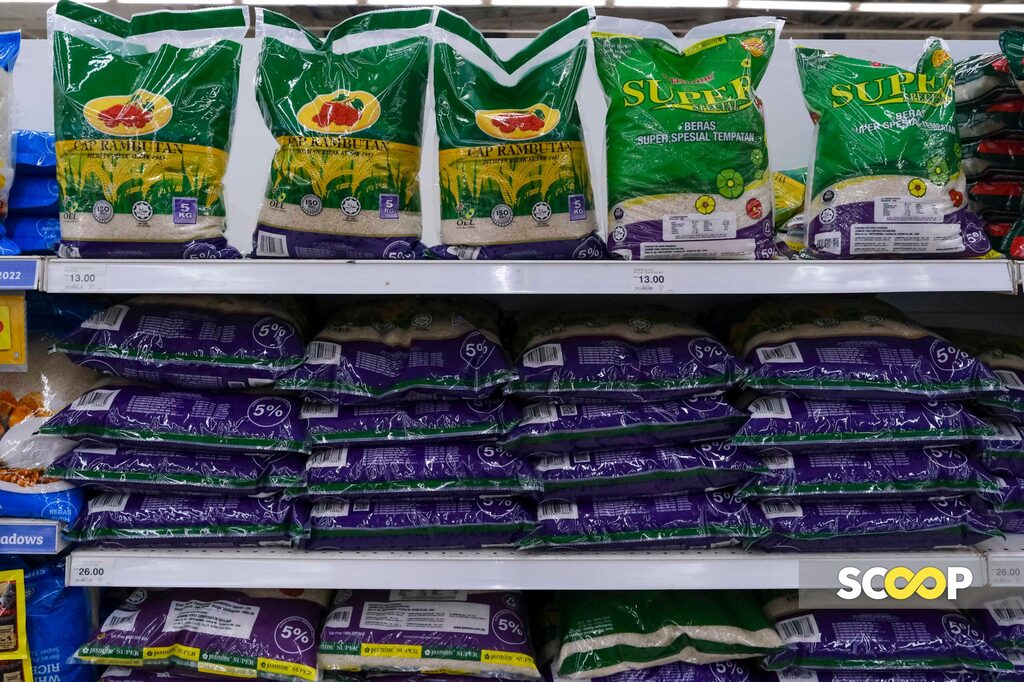
A survey by Scoop revealed that imported white rice, including brands such as Cap Masjid S.A., Cap Rambutan, Cap Bawang, Jati, and Floral, remained available in all surveyed locations. Their selling prices ranged from RM3.38 to RM4.58 per kg. In contrast, basmati rice options varied between RM9.98 and RM12.90 per kg. – September 6, 2023