

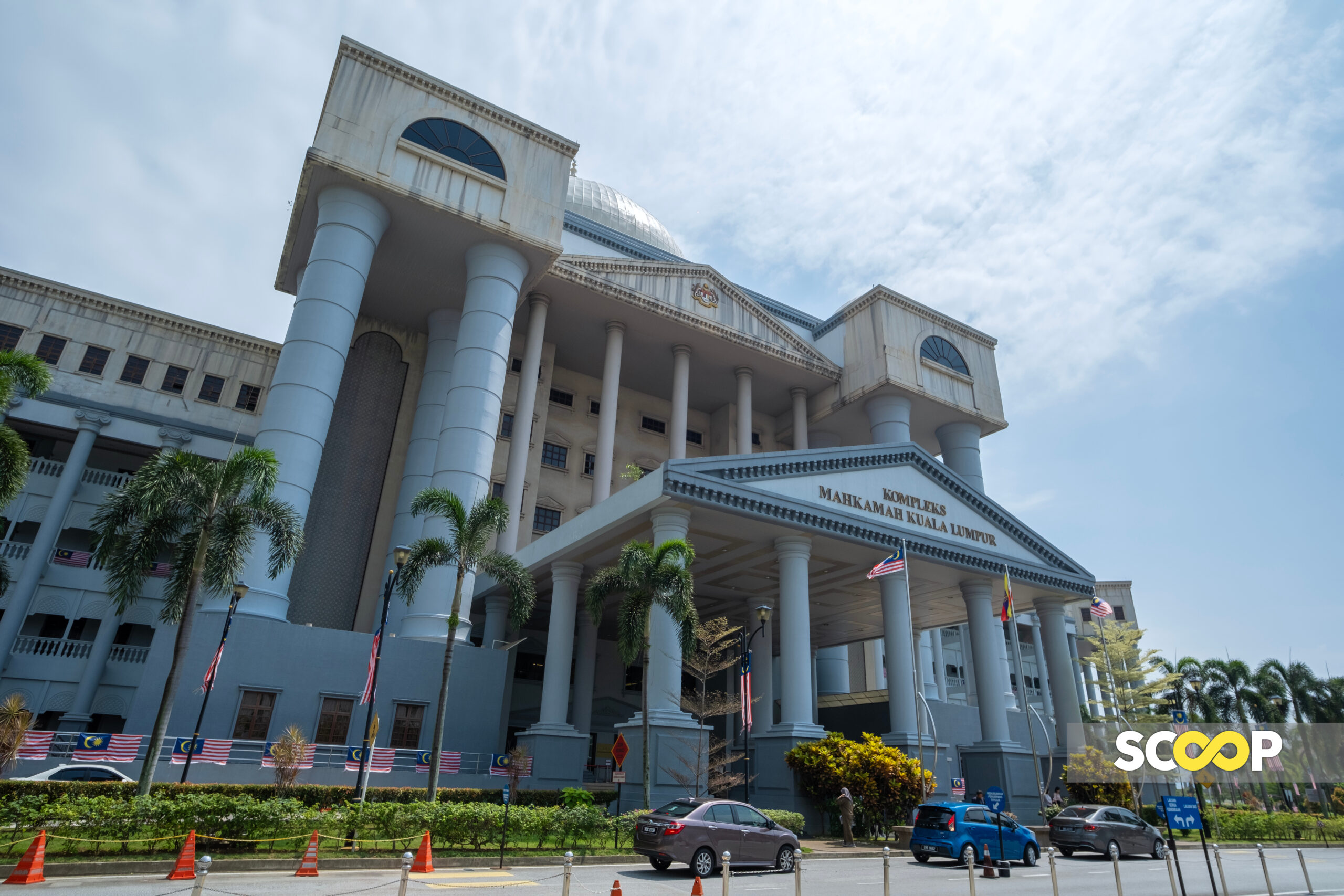
KUALA LUMPUR – The high court here was told today that the investments made by 1Malaysia Development Bhd (1MDB) did not generate any profit and even caused 1MDB to suffer losses.
Malaysian Anti-Corruption Commission (MACC) investigating officer Nur Aida Ariffin, 37, said this when refuting a suggestion made by lawyer Wan Azwan Aiman Wan Fakhruddin, who represents Datuk Seri Najib Razak, that 1MDB was profitable through its investments in various sectors.
Wan Azwan Aiman then cited 1MDB’s acquisition of two independent power producers (IPPs) – Mastika Lagenda Sdn Bhd and Tanjong Energy Holdings Sdn Bhd – as examples, which were said to generate a profit, but Nur Aida disagreed and stated that the IPPs had to be sold to investors from China to pay off 1MDB’s existing debts.
The 49th prosecution witness said this when cross-examined by Wan Azwan Aiman at the former prime minister’s trial for alleged misappropriation of 1MDB funds, amounting to RM2.3 billion.
Wan Azwan Aiman: Although you have concluded that all the projects that 1MDB participated in failed, agree with me that we now have the TRX Tower building.
Nur Aida: Correct, I said 1MDB suffered a loss. TRX was not developed using 1MDB’s own investment money, as found in the joint venture agreement at the initial stage; instead, 1MDB had to get separate investments by getting other companies to invest to develop TRX.
She said the results of her investigation found that the funds obtained for the development of TRX, or its original name, Kuala Lumpur International Financial District, had been misappropriated, and that the development of TRX had actually been financed by foreign investors.
“Meanwhile, to bear the impact of 1MDB’s debt from the acquisition of IPPs, through the guarantee of the International Petroleum Investment Company (IPIC), Datuk Seri Najib has instructed his special officer, Datuk Amhari Efendi Nazarudin, to conclude a confidential agreement, called the binding term sheet (BTS), between IPIC and the Malaysian government,” she said.
On September 4, 2019, Amhari Efendi, when testifying as a witness in this trial, revealed that Najib had assigned him to meet the chief executive officer of Mubadala, Khaldoon Mubarak, in Abu Dhabi, United Arab Emirates, to settle the 1MDB-IPIC dispute outside the International Arbitration Court (IAC).
Amhari Efendi said he was instructed by Najib to do that because, at that time, the Abu Dhabi side wanted to bring the BTS issue between IPIC and 1MDB to the IAC.
Amhari Efendi added that Najib instructed him to get an affirmation from Abu Dhabi that both countries have agreed to resolve the matter without going to the IAC. He added that it was one of Najib’s secret missions for him because, at that time, the issue of 1MDB’s debt to IPIC was being hotly debated.
The defence completed cross-examining the prosecution’s key witnesses today, after a 16-day cross-examination session.
Deputy public prosecutor Ahmad Akram Gharib then began a re-examination of Nur Aida, involving bank documents through Mutual Legal Assistance from Barbados, Singapore and Hong Kong.
Najib, 70, is facing four charges of using his position to obtain gratification, totalling RM2.3 billion in 1MDB funds, and 21 counts of money laundering related to the amount.
The trial before judge Datuk Collin Lawrence Sequerah continues tomorrow. – May 29, 2024