

KUALA LUMPUR – Seven Gabungan Rakyat Sabah (GRS) MPs will submit a memorandum to the Public Accounts Committee (PAC) next week, calling for its investigation into the Sabah Pan Borneo Highway project to be expanded to include the circumstances and consequences of the decision to scrap the Project Delivery Partner (PDP) model in 2019.
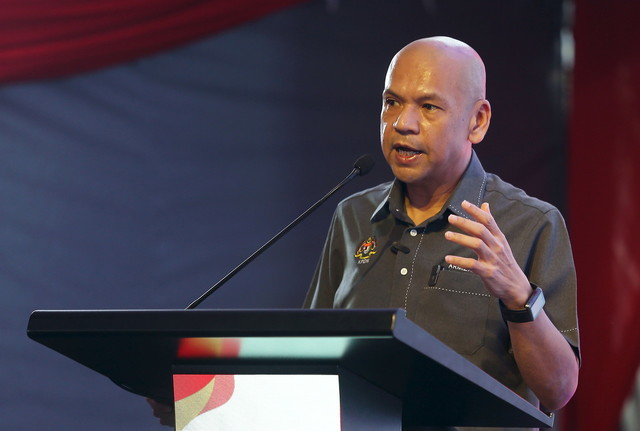
Papar MP Datuk Armizan Mohd Ali said the investigation should go beyond examining the project’s current progress and performance, and also scrutinise past policy decisions that may have contributed to construction delays, changes in contractor appointments and escalating costs, Bernama reported.
The GRS secretary-general welcomed the PAC’s decision on Oct 19 to investigate the project’s management, financial governance and physical implementation following the release of the Auditor-General’s Report Series 2/2026.
However, he said the inquiry should cover four key areas relating to the termination of the PDP model on Sept 22, 2019, to establish the underlying causes of the project’s delays.
“Our recommendation to the PAC is therefore to broaden the scope of its investigation to include the basis for and implications of the termination of the PDP model,” he told reporters after officiating the closing ceremony of the IP SPARK 2026 programme here today.
Armizan, who is also Domestic Trade and Cost of Living Minister, said the first area requiring clarification was the apparent lack of details in the Auditor-General’s Report on the implications of scrapping the PDP arrangement.
He pointed out that the Works Ministry had previously identified the decision as one of the factors behind the project’s delays in its official responses in the Dewan Rakyat on Aug 2, 2022, and Oct 19, 2026.
“So this is not a political story or a political issue determined by someone, but an official answer in the Dewan Rakyat,” he said.
The second area concerns the rationale behind the Federal Government’s decision to discontinue the PDP model in 2019, following a recommendation by the Sabah state administration at the time.
Armizan said the PAC should establish whether a comprehensive assessment had been conducted before the decision was made.
The third issue involves uncertainty over the PDP arrangement and contractor appointments following the change of government in May 2018.
He claimed the uncertainty had disrupted construction activities on the ground for more than a year, before existing contractors were reappointed under the conventional procurement method in 2019.
The interruption was also believed to have contributed to higher project costs, particularly as contractors faced rising construction material prices amid inflation, compounded by the effects of the Covid-19 pandemic.
The fourth area concerns the process of reappointing existing contractors and appointing new ones following the transition from the PDP model to the conventional approach.
Armizan said the transition had disrupted the appointment process, with some packages under Phase 1A only proceeding to the appointment stage in 2021.
“We hope the proceedings will not only involve government agencies, but also call in the contractors to hear about the pressures and issues they encountered,” he said.
He stressed that the memorandum was not intended to assign blame to any particular party, but to ensure that decisions involving public infrastructure projects were not driven by partisan political considerations at the expense of effective implementation. – November 15, 2026