

KUALA LUMPUR – Budget 2026 marks a decisive shift in Malaysia’s economic direction from subsidy-driven consumption to investment-driven transformation as the government pursues fiscal consolidation while sustaining growth momentum, economists said.
Nevertheless, they emphasised that execution remains the key test of credibility of the financial management measures laid down under the budget.
Senior economic advisor to the KSI Strategic Institute for Asia Pacific and Small and Medium Enterprise (SME) National Council member, Anthony Dass said the government’s ability to sustain growth between 4.0 and 4.5 per cent while narrowing the fiscal deficit to 3.5 per cent demonstrates credible fiscal resilience amid global headwinds.
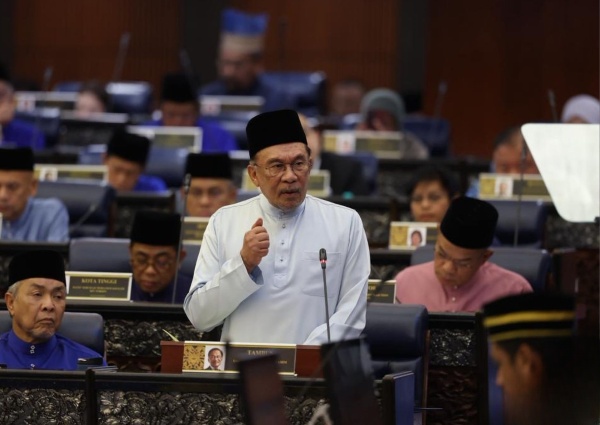
“This is not an austerity budget — it is a growth-discipline budget. Leakage control, subsidy rationalisation and enforcement recoveries of RM15.5 billion have created fiscal room for investments in the sectors that matter most: productivity, education, healthcare and energy transition,” he told Bernama when responding to the budget tabled by Prime Minister Datuk Seri Anwar Ibrahim on Friday.
Dass said the government’s total public outlay of RM470 billion reflects a disciplined yet pragmatic approach — allowing Malaysia to balance fiscal realism with developmental ambition.
“Malaysia is shifting away from short-term subsidy dependence towards long-term investment in capability and competitiveness — that is the real transformation taking shape under Budget 2026,” he said.
Dass said the budget extends a clear signal that Malaysia is open for business but on higher-value terms, with measures that encourage firms to scale, digitise and decarbonise.
Among the initiatives are RM10 billion in small and medium enterprises (SME) financing and guarantees, 10-year tax incentives for venture capital, and a RM3 billion Green Investment Fund under Bank Pembangunan Malaysia Bhd (BPMB).
He added that the alignment of fiscal tools with national strategies such as the National Semiconductor Strategy (NSS), New Industrial Master Plan 2030 (NIMP 2030) and the National Energy Transition Roadmap (NETR) will strengthen investor confidence and crowd in institutional capital through Khazanah Nasional Bhd and Retirement Fund (Incorporated) and Bank Pembangunan Malaysia Bhd.
“The tone of Budget 2026 signals credible policy continuity — something both markets and investors have long demanded,” he said, adding that the green, digital and regional transformation agenda underpins Malaysia’s shift towards high-value sustainable growth.
He also welcomed the government’s emphasis on inclusivity through record allocations to Sabah and Sarawak for roads, utilities and digital infrastructure, calling it a move that transforms regional inclusion into an economic strategy, not merely social equity.
Meanwhile, Bank Muamalat Malaysia Bhd chief economist Mohd Afzanizam Abdul Rashid said the budget demonstrates the government’s ongoing commitment to fiscal discipline while ensuring economic growth remains sustainable.
He said the total allocation of RM419.2 billion, compared with the previous year, remains sizeable and reflects the government’s careful balance between reform and resilience.
“The government remains mindful of fiscal discipline, and this is reflected in its effort to reduce the budget gap while maintaining sustainable economic growth,” he said.
Mohd Afzanizam added that domestic demand will continue to anchor Malaysia’s growth in 2026, led by a 5.4 per cent expansion in private consumption and steady investment growth of 7.7 per cent, even as external demand is expected to remain weak.
He said the government’s targeted assistance — such as Sumbangan Tunai Rahmah (STR), Sumbangan Asas Rahmah (SARA), and support for microentrepreneurs under Syarikat Jaminan Pembiayaan Perniagaan (SJPP) guarantees — would help cushion lower-income households while sustaining consumption.
“Cash transfers such as STR and SARA should help alleviate the financial burden of the middle- and lower-income groups, while SJPP guarantees covering microenterprises would enhance credit access and entrepreneurship,” he said.
Mohd Afzanizam also highlighted the government’s tax exemption incentives for agri-food investments, which could help strengthen Malaysia’s food security and self-sufficiency levels.
The economists agreed that the Budget 2026 framework is reformist yet realistic, striking a balance between fiscal consolidation and growth supported by targeted subsidies, institutional reform and green investments.
Dass emphasised that execution remains the key test of credibility.
“The budget’s architecture is sound — the issue is not allocation but absorption. Incentives and funds must translate into faster disbursement, lower bureaucracy and measurable outcomes,” he said.
He cautioned that Malaysia must ensure the savings from subsidy rationalisation are channelled into productive investments rather than short-term populism, while the Progressive Wage Model must be anchored on real productivity gains, not compliance burdens.
“This budget gets the right direction, but delivery discipline will determine its success. The government has set the architecture and now it must ensure execution lives up to ambition,” he added. – October 12, 2025